NCATOD supports and empowers NC treatment professionals to enhance the quality of patient care in treatment programs by promoting the growth and development of comprehensive opioid treatment services throughout North Carolina.
About the Annual NCATOD Conference
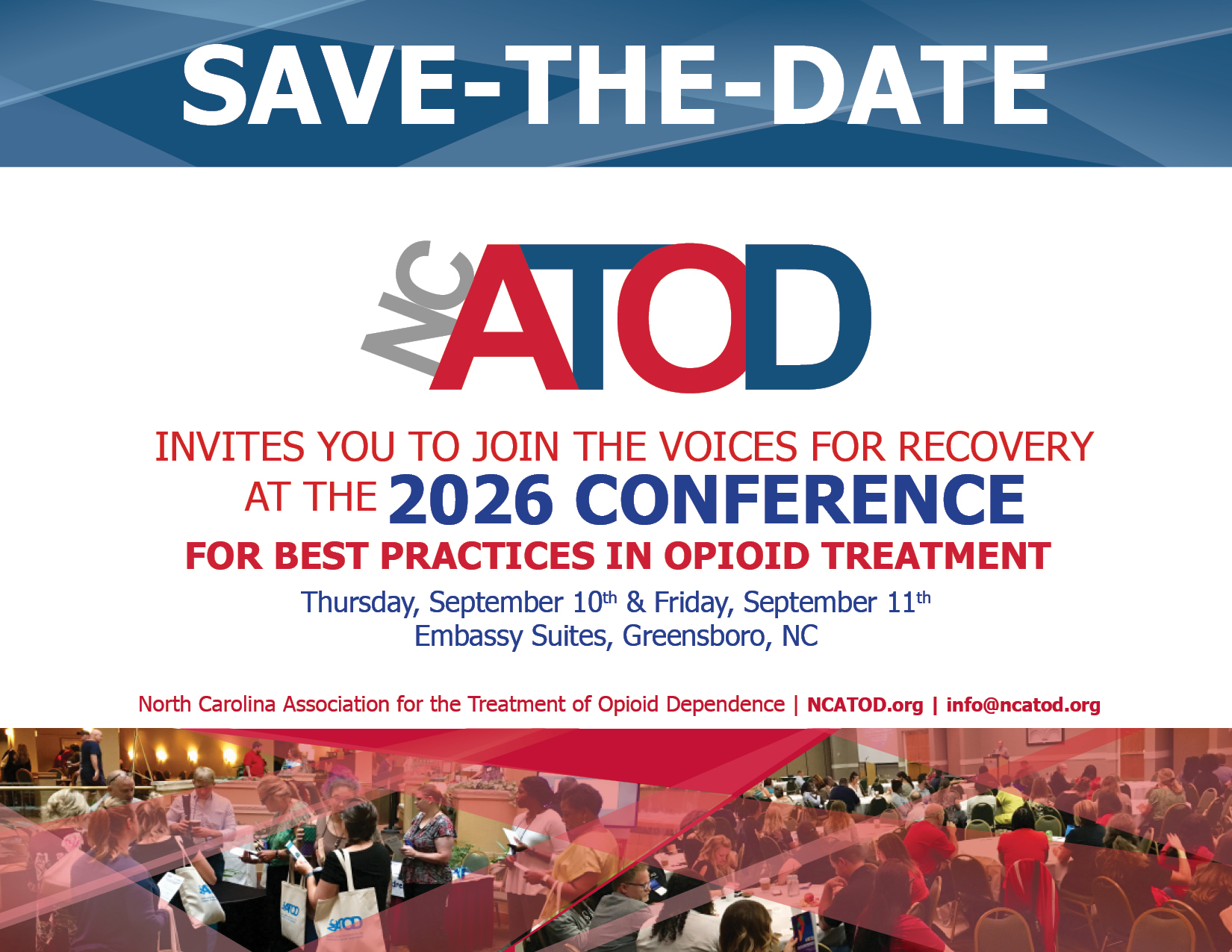
Welcome to the 2026 NCATOD Conference where we will be discussing Best Practices in Opioid Treatment! Join us in person at Embassy Suites in Greensboro for an event filled with informative sessions, engaging discussions, and networking opportunities. Learn from experts in the field, share your experiences, and gain valuable insights to improve opioid treatment practices. Sessions have been designed to meet specialized needs of nurses, counselors, administrators and support staff working in the field of Medically Assisted Treatment. Don’t miss this chance to be a part of the conversation and make a difference in the opioid treatment community. Register now to secure your spot!
NCATOD is the North Carolina affiliate of the American Association for the Treatment of Opioid Dependence (AATOD), which was founded in 1984 to enhance the quality of patient care in treatment programs by promoting the growth and development of comprehensive opioid treatment services throughout the United States.
Professional Credit Available
NCATOD has applied to NC Substance Addiction Specialist Professional Practice Board (NCASPPB) for up to 9 hours of credit. Individual credit will be awarded for each session attended, and NCASPPB credit is included with conference registration.
Who Should Attend?
This conference is for nurses, counselors and support staff working in the field of Medically Assisted Treatment, such as:
- Social Workers
- Marriage and Family Therapists
- Professional Counselors
- Mental Health Counselors
- Nurses
Thursday, September 10, 2026
4:00 – 5:30 p.m. — Registration Opens
5:30 – 6:00 p.m. — Networking Dinner
6:00 – 8:00 p.m. — Announcements, Welcome, and Opening Plenary
Announcements & Welcome
Kenny House, NCATOD President
Beyond Narcan: Advancing Biopsychosocial Care in Opioid Treatment Programs
Dr. Ramesh C. Upadhyaya
Anna Stanley, LCMHSCS, LCAS, CCS
Friday, September 11, 2026
7:45 – 8:30 a.m. — Registration & Networking Breakfast
8:30 – 10:00 a.m. — Morning Plenary
Announcements & Welcome
Kenny House, NCATOD President
42CFR Part 8: Case Studies in Improving Care Through Individualized Treatment
Shuchin Shukla, MD, MPH
10:00 – 10:15 a.m. — BREAK
10:15 – 11:45 a.m. — Concurrent Breakout Sessions I
Session A: Meeting Patients Where They Are: The Mobile OTP Journey | Eric Morse, MD and Jacqueline Giarratano DBA, MBA
Session B: Beyond the Service:
Promoting Post-Traumatic Growth in Veterans and the Communities they Support | Garret Biss, CPRC
Session C: Even Canned Vegetables have a Label: Overcoming Stigma of Mental Illness | Melissa Enoch, LCMHC, QS, LCAS, CCS, MACTP
Session D: A Kinder, Gentler Anti-Stigma Message: Moving Beyond Guilt Toward Connection | Jeremy Seamon MA, LCAS, LCMHC, CCS
Session E: Ethics in Maternal & Family SUD Care: Applying NAADAC Principles to Whole‑Family Recovery Models | Ron Flack, MA, M-Div, PhD, LCAS, CCSI, ICAADC, MA
11:45 – 1:15 p.m. — Luncheon Session: State Update, NC DHHS Assistant Secretary | Kelly Crosbie, MSW, LCSW
1:15 – 2:45 a.m. — Concurrent Breakout Sessions II
Session A: Hep C | Richard Moore, MD
Session B: Breaking Barriers Through Peer Support & Recovery | Khrecia Holley, CPSS
Session C: Breaking the Chains: Overcoming Stigma | Siobhan A. Morse, MHSA, CRC, CAI, PRSS, MAC
Session D: Second Chances in Action: Transforming Through Jail Diversion and Re-Entry | LaKisha D. Ellison, DSW, MSW, LCSW and Sgt. Archie Lynch
Session E: Addiction, Addiction. What’s your Prediction? | Linda Hamilton, CADC
2:45 – 3:00 p.m. — BREAK
3:00 – 4:30 p.m. — Concurrent Breakout Sessions III
Session A: Harm Reduction: Because “Just Stop” Isn`t a Care Plan | Shanna Houston, LPN; Tammy Dishman, RN; & Lesa Pizzi, FNP
Session B: From Resistance to Readiness: MI in High-Stakes Care | Amanda Young, LPA, LCAS, CC
Session C: Woodstock and Beyond: Substance Use and Older Adults | James Campbell, LPC, LAC, MAC, AADC
Session D: Dietary Influences on People Undergoing Treatment for Opioid Use Disorder | Anastassia Skarlinski MPH, RD, LDN
Session E: Co-Occurring Disorders and Gambling: A Behavioral Health Perspective | Olivier Williams
OPENING PLENARY: Beyond Narcan: Advancing Biopsychosocial Care in Opioid Treatment Programs
Dr. Ramesh C. Upadhyaya
Anna Stanley, LCMHCS, LCAS, CCS
Dr. Ram Upadhyaya is a family nurse practitioner specializing in rehabilitation, with a focus on opioid use disorder. Known for compassionate, evidence-based care, he blends clinical expertise with advocacy to support recovery and improve patient outcomes.
Anna Stanley is a Licensed Clinical Addictions Specialist and a Licensed Clinical Mental Health Counselor with expertise in opioid treatment. As North Carolina’s State Opioid Treatment Authority (SOTA), she is responsible for overseeing North Carolina’s vast network of Opioid Treatment Programs (OTPs), which are state and federally licensed programs offering Medications for Opioid Use Disorder (MOUD) as well as other treatment and recovery supports like counseling, case management, and peer support. Anna is passionate about guiding policy change to expand access to evidence-based treatment across the state, enhancing MOUD in criminal legal settings, and reducing stigma toward individuals with Opioid Use Disorder (OUD).
Session Description: This presentation moves beyond the life-saving role of naloxone to examine the interconnected drivers of substance use disorders and long-term recovery. Designed for professionals in opioid treatment and addiction care settings, it explores addiction through a practical biopsychosocial framework.
Participants will review how neurobiology, trauma, co-occurring mental health conditions, social determinants of health, stigma, and systemic barriers influence relapse risk and sustained recovery. The session highlights actionable strategies that counselors, social workers, nurses, administrators, and support staff can integrate into daily practice.
Key themes include the limits of crisis-only interventions, improving engagement and retention in medication-assisted treatment, addressing behavioral and psychosocial contributors to ongoing use, and building recovery-oriented systems of care. Attendees will leave with a broader understanding of patient behavior, strengthened interdisciplinary approaches, and practical tools to enhance outcomes in addiction treatment programs.
OPENING PLENARY: 42CFR Part 8: Case Studies in Improving Care Through Individualized Treatment
Shuchin Shukla, MD, MPH
Session Description: This presentation will provide a practical overview of the updated 42 CFR Part 8 regulations governing opioid treatment programs (OTPs) and methadone delivery for opioid use disorder (OUD). We will review key regulatory changes, including expanded take-home flexibilities, revised counseling requirements, and provisions that support more patient-centered, individualized care. Using case-based scenarios, the session will illustrate how medical providers can translate these regulatory changes into real-world clinical practice—addressing common implementation challenges in induction, stabilization, take-home decision-making, and retention. Participants will examine practical strategies to balance safety, compliance, and flexibility while reducing administrative burden. The presentation will also explore how to overcome barriers such as stigma, workflow constraints, staffing limitations, and transportation challenges. By applying Part 8 reforms through structured case discussions, providers will gain actionable tools to improve patient engagement, enhance retention, reduce overdose risk, and strengthen long-term treatment outcomes.
Shuchin Shukla, MD, MPH, was born and raised in New Orleans, Louisiana. He completed medical school and public health school at Tulane University and completed a residency at Montefiore Medical Center in the Bronx, New York. He is board certified in family medicine and addiction medicine. He has served in leadership positions related to population-based projects focused on overdose, addiction, HIV, Hepatitis C, and carceral health. He serves as Chief Medical Officer for Goldie Health, and as medical director at Greenville Comprehensive Treatment Center and Goldsboro Comprehensive Treatment Center, both opioid treatment programs.
CONCURRENT SESSIONS I-A: Meeting Patients Where They Are: The Mobile OTP Journey | Eric Morse, MD and Jacqueline Giarratano DBA, MBA
Session Description: Coming Soon
Dr. Eric Morse is an Addiction and Sports Psychiatrist. Dr. Morse is the CMO of the Morse Clinics – Johnston Recovery Services in Clayton, Morse Clinics of Asheboro, Durham, Roanoke Rapids, North Raleigh, Dunn, Zebulon, Chatham Recovery in Siler City, and Vance Recovery in Henderson. After his residency in psychiatry at the UNC, he completed an addiction psychiatry fellowship at the University of Maryland. He won the Fred Glazer Award in 2021 and the Marie Award in 2022 from AATOD for lifetime achievement in treating opioid use disorder. At Carolina Performance in Raleigh, Dr. Morse has been a PCSS-B mentor since it started in 2003 and is an Opioid Response Network mentor with the AAAP and SAMHSA.
Jacqueline Giarratano is a seasoned healthcare administrator with nearly 30 years of experience in business operations and leadership. She is a passionate advocate for expanding access to healthcare, particularly in the areas of substance use treatment services, behavioral health integration, and harm reduction. With a proven track record of transforming teams and driving strategic initiatives, Jacqueline has led multi-million-dollar organizations, focused on delivering impactful and equitable healthcare solutions. A subject matter expert in mobile healthcare, Jacqueline brings deep expertise in supporting organizations that deliver essential services where they are needed most. She currently serves as the Director of Compliance at Mission Mobile Medical Group. Since January 2023, she has championed the mission of providing care to underserved populations through innovative mobile solutions. Jacqueline holds a Doctorate Degree in Business Administration and Intelligence from Marymount University, College of Business, Innovation, Leadership, and Technology. Her research is focused on the drivers of turnover among Behavioral Health Professionals in Acute Substance Use Treatment. In addition to a Doctorate in Business Administration and Intelligence, she also holds an MBA from Grand Canyon University and a Bachelor of Science in Business Economics and Management from SUNY Cortland.
CONCURRENT SESSIONS I-B: Beyond the Service: Promoting Post-Traumatic Growth in Veterans and the Communities that Support Them
Garret Biss, CPRC is a retired Marine Corps Pilot. Transitioning from military service was a traumatic chapter of Garret’s life; one defined by a struggle with substances and alcohol. While surviving this chapter, Garret began a journey of personal discovery and meaning, which led to studying the science of human flourishing and emotional well-being as it pertains to recovery from addiction. Garret leverages his personal and professional experience as a presenter, certified recovery coach, and as a founder of a recovery residence. His mission is to empower others towards their best recovery through curriculum development, online programs, and recovery mindset coaching.
Session Description:
Veterans often return from service with more than physical scars—they carry invisible wounds that affect identity, relationships, and purpose. But trauma doesn’t have to be the end of the story. This session explores how we can transform adversity into a catalyst for growth—not only for veterans but for any individual navigating loss, hardship, or transition. Led by Garret Biss, a retired Marine Corps pilot and recovery coach, this session blends personal narrative, psychological research, and field-tested practices to reveal how post-traumatic growth (PTG) can be cultivated. Participants will explore the five domains of PTG and learn how to foster these in themselves and others through techniques drawn from positive psychology, trauma-informed care, and peer-based recovery models. This interactive presentation is designed for clinicians, peer specialists, and anyone working with veterans or other trauma-impacted populations.
CONCURRENT SESSIONS I-C: Even Canned Vegetables have a Label: Overcoming Stigma of Mental Illness
Melissa Enoch, LCMHC, QS, LCAS, CCS, MAC
Melissa Enoch, author of “I’ve Got 99 Problems, but Being Saved Isn’t One of Them” has been in the field of substance use and mental health disorders for 32 years working primarily in the areas of therapy, process groups and outreach. Melissa is the director of Trinity Counseling Services LLC and founder of Women of Strength NC. She earned her Masters of Science in Mental Health Counseling with specialization in Forensic Counseling, Masters of Business Administration from University of Phoenix and her Bachelor of Arts degree from the University of North Carolina.
Session Description: Stigma is defined as negative attitudes, beliefs and stereotypes people may hold towards those who experience mental health conditions. This stigma can prevent or delay people from seeking care or cause them to discontinue treatment. This presentation will provide the opportunity for participants to consider ways to help reduce mental health stigma through influencing lawmakers to reconsider ways that mental illness is treated, discussions surrounding regulations and policies that inhibit individuals’ living their truths in their respective careers and home environments and challenging defeating language when sharing about mental illness in media.
CONCURRENT SESSIONS I-D: A Kinder, Gentler Anti-Stigma Message: Moving Beyond Guilt Toward Connection
Jeremy B. Seamon, MA, LCAS, LCMHC, CCS
Jeremy Seamon is the Program Director for Coastal Horizons Center in Brunswick County, North Carolina, where he has worked for the past ten years overseeing substance use treatment services. In 2023, he helped lead the opening of Brunswick County’s Opioid Treatment Program (OTP), expanding access to medication-assisted treatment and recovery support in a largely rural community. Jeremy also serves on the Brunswick County Mental Health and Substance Use Addictions Commission, working with local partners to improve behavioral health services and overdose prevention efforts. His work focuses on practical, community-based recovery solutions. Jeremy is also the caretaker of a cactus named Uncle Bob, who unfortunately could not attend the conference.
Session Description: Over the past decade, anti-stigma efforts in addiction treatment have largely focused on education, awareness campaigns, and correcting language. While these initiatives were developed with good intentions, many professionals in the field have found that lecture-based approaches and guilt-focused messaging do not always lead to meaningful shifts in public perception. This presentation explores an alternative approach to stigma reduction—one rooted in empathy, direct human contact, and community engagement. Drawing on clinical experience, recovery principles, and social psychology research, the presenter will discuss how authentic conversation, peer storytelling, and shared service activities can be more effective in changing attitudes toward people with substance use disorders. Participants will learn how opioid treatment programs can create opportunities for constructive dialogue between patients, families, providers, and community members. The session will offer practical strategies for fostering understanding while maintaining respect, dignity, and belief in the recovery potential of every individual served.
CONCURRENT SESSIONS I-E: Ethics in Maternal & Family SUD Care: Applying NAADAC Principles to Whole‑Family Recovery Models
Ron Flack, MA, M-Div, PhD, LCAS, CCSI, ICAADC, MAC
Dr. Ron Flack, Jr. is a seasoned behavioral health executive with more than two decades of leadership experience, serving as Vice President of the Carolinas Region for Volunteers of America Chesapeake & Carolinas, where he guides strategy, operational performance, program growth, risk management, and leadership development. A licensed clinical addiction specialist and former CEO, MOUD program sponsor, and chief compliance officer, he brings deep expertise in co-occurring disorders, systems design, and clinical supervision, shaped by national consulting work and the launch of behavioral health programs across the country. His commitment to service extends into the community through board appointments and as co-founder of The Flack Foundation, reflecting his long-term recovery journey and belief in restoration and second chances. Dr. Flack holds two bachelor’s degrees, two master’s degrees in divinity and addiction counseling, and a doctorate from Grace College and Seminary, and he continues to serve in ministry while leading regional behavioral health initiatives with a focus on dignity, responsiveness, and lasting pathways to recovery.
Session Description: This presentation explores the Family Focused Recovery (FFR) model through the lens of ethical practice, integrating the NAADAC Code of Ethics to guide decision‑making with pregnant and parenting families impacted by substance use disorders. It highlights how ethical responsibilities—such as safeguarding confidentiality, ensuring informed consent, preventing discriminatory care, and maintaining clear professional boundaries—shape every aspect of integrated treatment. The session connects maternal health data, system barriers, and racial disparities to NAADAC principles on cultural humility, client autonomy, and non‑maleficence. It also examines ethical considerations in coordinating care across medical, behavioral health, child welfare, and legal systems, grounded in the requirements of 42 CFR Part 2 for SUD confidentiality. Participants learn how FFR upholds NAADAC’s expectations for professionalism, privacy, supervision, and equitable service delivery while fostering safe engagement of fathers and partners. Together, these elements position FFR as a clinically sound and ethically aligned model for whole‑family recovery.
CONCURRENT SESSIONS II-A: Hep C
Richard Moore, MD
Bio Coming Soon
Session Description: Coming Soon
CONCURRENT SESSIONS II-B: Breaking Barriers Through Peer Support & Recovery
Khrecia Holley, CPSS
Khrecia Holley is the Founder and Executive Director of Truth2Live Peer Recovery Services LLC, a grassroots organization serving Eastern North Carolina through recovery support, reentry advocacy, behavioral health education, and community outreach. As a Certified Peer Support Specialist, WRAP Facilitator, CADC-R, and Forensic Peer Support Specialist, Khrecia combines lived experience with professional expertise to empower underserved communities. She is a statewide advocate for authentic peer support, stigma reduction, and systems collaboration.
Session Description: This presentation explores the transformative impact of peer support, lived experience, and community collaboration within behavioral health and recovery systems. Participants will gain insight into how peer-led services reduce stigma, increase engagement, and improve recovery outcomes for individuals impacted by mental health challenges, substance use disorders, and reentry barriers.
CONCURRENT SESSIONS II-C: Breaking the Chains: Overcoming Stigma
Siobhan A. Morse, MHSA, CRC, CAI, PRSS, MAC
Siobhan Morse is the Product Director for UHS, focusing on the Addiction Division, including new product development in the opioid use disorder treatment space. Her lived experience, training as a peer specialist, education and research allow her to bring a unique perspective to leadership. She regularly presents original research including at the request of the White House and the Department of Justice. She has published multiple articles in peer reviewed journals, including several focusing on opioid use and treatment; and contributed a chapter highlighting her lived experience to the award-winning book, Breakthrough. In recognition of her work, she has received a U.S. Presidential Proclamation.
Session Description: Stigma remains one of the most powerful barriers to effective treatment for substance use disorders (SUD), particularly opioid use disorder (OUD). Negative attitudes toward medications for opioid use disorder (MOUD), individuals in recovery, and harm-reduction strategies can discourage people from seeking care, undermine treatment engagement, and influence clinical decision-making. Breaking the Chains: Overcoming Stigma examines how stigma develops across healthcare systems, communities, and even treatment environments. This session explores the neuroscience and social psychology underlying stigma, the impact of stigmatizing language, and how structural stigma affects policy and access to care. Participants will learn practical strategies to reduce stigma in clinical practice, organizational culture, and community messaging. Emphasis will be placed on person-first language, trauma-informed approaches, and evidence-based communication that supports recovery and improves treatment outcomes.
CONCURRENT SESSIONS II-D: Second Chances in Action: Transforming Through Jail Diversion and Re-Entry
LaKisha D. Ellison, DSW, MSW, LCSW and Sgt. Archie Lynch
Kisha Ellison is the Behavioral Health Division Director with the Guilford County Sheriff’s Office (GCSO), where she oversees the Re-Entry and Jail Diversion programs, Employee Wellness, and the Peer Support Team. Since entering the field of social work in 2007, she has gained experience across a variety of settings, strengthening systems that support individuals, families, and communities. Her work focuses on improving behavioral health access within the justice system and supporting the wellbeing of law enforcement personnel. In addition to her professional role, Kisha serves as an adjunct instructor at Bennett College, where she contributes to the education and development of future professionals.
Archie Lynch has served with the Guilford County Sheriff’s Office (GCSO) for over 9 years and held the rank of Detention Sergeant. During his tenure, he worked in the Re-Entry Program as a Housing Coordinator, helping individuals secure stable housing as they transitioned back into the community. He later moved into a leadership role within the Jail Diversion Program, supporting efforts that connect individuals to behavioral health and community resources. Sgt. Lynch is passionate about serving his community and is deeply committed to creating pathways for second chances and successful reintegration.
Session Description:
This presentation highlights practical strategies used to support individuals with behavioral health and substance use challenges who become involved in the criminal justice system. Presenters will discuss how jail diversion and re-entry initiatives within the Guilford County Sheriff’s Office connect individuals to treatment, housing resources, and community-based supports to reduce recidivism and improve long-term stability. The session will explore collaborative approaches between law enforcement, behavioral health professionals, and community partners that help address underlying needs while promoting accountability and recovery. Participants will gain insight into program development, common barriers, and lessons learned from implementing these initiatives. Emphasis will be placed on practical, replicable strategies that support successful reintegration and create meaningful opportunities for second chances within justice-involved populations.
CONCURRENT SESSIONS II-E: Addiction, Addiction. What’s your Prediction?
Linda Hamilton, CADC
Linda Hamilton is a leading figure in the field of addiction recovery and mental health. As founder of Beyond Addiction, a DWI agency specializing in assisting individuals prepare for relicensing and the prevention of other DWI’s, she utilizes Acceptance and Commitment Therapy as her main model. She is also an anger Management. She aims to help individuals overcome challenges and achieve lasting change. She holds certificates in ACT and in Creative Mind Coaching, ACT Matrix coaching and Self-Compassion Trainer. Hamilton’s understanding of the therapeutic process has led to the discovery of many techniques that free individuals of various addictions.
Session Description:
“First, do no harm” is the core tenet of medical and behavioral health ethics. LGBTQ+ individuals are a hidden minority in addiction treatment settings. Issues of shame and trauma specific to this population, when left unaddressed result in unsuccessful outcomes. This session will increase participant’s knowledge of the issues of affectional/ gender minorities and increase their skills for recognizing and working with this population.
CONCURRENT SESSIONS III-A: Harm Reduction: Because “Just Stop” Isn`t a Care Plan
Shanna Houston, LPN; Tammy Dishman, RN; & Lesa Pizzi, FNP
Shanna Houston, LPN is the Assistant Executive Director for Stepping Stone of NC. As a nurse with 16+ years experience, with 8+ years in the OTP setting, she has focused her expertise in medication-assisted treatment protocols, regulatory compliance, and quality improvement initiatives. Proven ability to coordinate care with physicians, counselors, and social workers to optimize patient outcomes. Committed to upholding the highest standards of safety, confidentiality, and ethical practice in addiction treatment settings.
Lesa Pizzi, FNP-BC, is a Family Nurse Practitioner with Stepping Stone of North Carolina. Her clinical experience includes family practice, hospital medicine, critical care nursing, inpatient substance use disorder detoxification, and outpatient opioid use disorder treatment. She focuses on evidence-based care, patient-centered treatment planning, and interdisciplinary collaboration to support long-term recovery. Committed to reducing stigma and improving access to treatment, she strives to provide compassionate, high-quality care for individuals affected by substance use disorders.
Tammy Dishman, RN is a dedicated nurse with nine years of nursing experience, including the past four years specializing in addiction medicine. She is passionate about providing patient-centered care and is committed to improving the lives of individuals affected by substance use disorders. Tammy recognizes the importance of meeting patients where they are and supporting positive health outcomes without judgement. Her experience in addiction treatment has strengthened her belief that empathy, education, and evidence-based practices are essential to reducing stigma and promoting recovery.
Session Description: Coming Soon
CONCURRENT SESSIONS III-B: From Resistance to Readiness: MI in High-Stakes Care
Amanda Young, LPA, LCAS, CC
Amanda Young, LPA, LCAS, CCS, is a member of the Motivational Interviewing Network of Trainers (MINT) and provides Motivational Interviewing training and consultation to behavioral health and SUD treatment professionals. She has extensive clinical experience in substance use disorder treatment settings and currently serves as a clinical supervisor, supporting treatment professionals in delivering ethical, effective, and evidence-based care. She offers introductory and advanced MI trainings, ongoing coaching, and coding-based feedback to help organizations strengthen skill development and fidelity. Her work focuses on integrating MI Spirit with accountability, safety, and compassionate care in high-stakes environments.
Session Description:Professionals in treatment settings routinely engage in high-stakes conversations involving overdose risk, medication adherence, polysubstance use, diversion concerns, and mandated care. In these moments, the pressure to persuade, warn, or correct can activate the clinician’s “righting reflex,” risking an increase in client sustain talk and defensiveness. This interactive workshop focuses on applying Motivational Interviewing (MI) effectively when the stakes feel sky-high. Participants will learn to identify sustain talk and distinguish it from discord, respond strategically with complex reflections, and maintain MI Spirit while honoring safety concerns and accountability. Emphasis will be placed on high-impact micro-skills that can be used even in brief encounters. Through demonstrations and guided practice, attendees will strengthen their ability to form a strong therapeutic alliance, evoke change talk, and navigate ambivalence in opioid treatment settings.
CONCURRENT SESSIONS III-C: Woodstock and Beyond: Substance Use and Older Adults
James Campbell, LPC, LAC, MAC, AADC
James Campbell, LPC, LAC, MAC, AADC has worked professionally in the human services field for over thirty years in a wide range of clinical settings, currently serving as the Associate Director for the Southeast Addiction Technology Transfer Center. His passion is equipping providers to support individual and family wellness effectively and build on the strengths they possess and equipping the next generation of addiction professionals to serve those in their care effectively. He’s a member of both NAADAC and ACA and is a nationally recognized author and speaker.
Session Description: Coming Soon.
CONCURRENT SESSIONS III-D: Dietary Influences on People Undergoing Treatment for Opioid Use Disorder
Anastassia Skarlinski MPH, RD, LDN
Ms. Skarlinski is a registered dietitian most recently employed at Central Regional Hospital in Butner, NC as a clinical dietitian and at RJ Blackley in the same role before its closure. She is also a current PhD student at University of North Carolina in Greensboro, working with a concentration in Nutrition. Prior to attending UNCG she attained a Masters of Public Health from Chapel Hill and a Bachelor’s of Science from Appalachian State University both with a concentration in Nutrition.
Session Description: A presentation of the findings from a cross sectional 3-phase study to assess the nutritional influences on people undergoing treatment for opioid use disorder at medication for addiction treatment centers in North Carolina. People enrolled in MAT have been found to have several nutrition related health problems. When entering treatment, they are often malnourished however while in treatment they may experience rapid weight gain and metabolic irregularities. These issues are often thought to be related to less desirable nutrition choices however, there is little to no research related to the drivers of nutrition choices for people in MAT. This dissertation project sets out to understand the personal, social, environmental, and policy issues that affect the choices people in MAT make.
CONCURRENT SESSIONS III-E: Co-Occurring Disorders and Gambling: A Behavioral Health Perspective
Olivier Williams
Olivier Williams is Director of Business Development for Health Systems at Kindbridge Behavioral Health, where she leads national partnerships to expand access to care for individuals experiencing gambling-related harm, digital dependencies, and co-occurring mental health conditions. A graduate of Emory University School of Law, Olivier is deeply committed to advancing health equity by reducing barriers to care through cross-sector collaboration, referral pathways, and community-based solutions. Her work centers on increasing education, access, and representation—ensuring individuals feel seen, supported, and connected to care that reflects their lived experiences.
Session Description:
Gambling-related harm rarely exists in isolation. This session explores the complex intersection of gambling and co-occurring conditions including substance use, depression, anxiety, PTSD, and ADHD—particularly within today’s digital-first environment. As access to sports betting and iGaming continues to expand, behavioral health professionals are increasingly encountering layered presentations that are often under-identified or misattributed. This presentation offers a practical, behavioral health–focused lens on how these conditions interact, amplify risk, and impact treatment engagement. Emphasis will be placed on early identification, understanding overlapping symptomology, and integrating more responsive, whole-person approaches to care. Attendees will leave with actionable strategies to better recognize co-occurring patterns, strengthen screening and referral pathways, and support individuals in a way that is trauma-informed, accessible, and aligned with real-world care settings.
OPENING PLENARY: Beyond Narcan: Advancing Biopsychosocial Care in Opioid Treatment Programs
Dr. Ramesh C. Upadhyaya
Anna Stanley, LCMHCS, LCAS, CCS
Dr. Ram Upadhyaya is a family nurse practitioner specializing in rehabilitation, with a focus on opioid use disorder. Known for compassionate, evidence-based care, he blends clinical expertise with advocacy to support recovery and improve patient outcomes.
Anna Stanley is a Licensed Clinical Addictions Specialist and a Licensed Clinical Mental Health Counselor with expertise in opioid treatment. As North Carolina’s State Opioid Treatment Authority (SOTA), she is responsible for overseeing North Carolina’s vast network of Opioid Treatment Programs (OTPs), which are state and federally licensed programs offering Medications for Opioid Use Disorder (MOUD) as well as other treatment and recovery supports like counseling, case management, and peer support. Anna is passionate about guiding policy change to expand access to evidence-based treatment across the state, enhancing MOUD in criminal legal settings, and reducing stigma toward individuals with Opioid Use Disorder (OUD).
Session Description: This presentation moves beyond the life-saving role of naloxone to examine the interconnected drivers of substance use disorders and long-term recovery. Designed for professionals in opioid treatment and addiction care settings, it explores addiction through a practical biopsychosocial framework.
Participants will review how neurobiology, trauma, co-occurring mental health conditions, social determinants of health, stigma, and systemic barriers influence relapse risk and sustained recovery. The session highlights actionable strategies that counselors, social workers, nurses, administrators, and support staff can integrate into daily practice.
Key themes include the limits of crisis-only interventions, improving engagement and retention in medication-assisted treatment, addressing behavioral and psychosocial contributors to ongoing use, and building recovery-oriented systems of care. Attendees will leave with a broader understanding of patient behavior, strengthened interdisciplinary approaches, and practical tools to enhance outcomes in addiction treatment programs.
OPENING PLENARY: 42CFR Part 8: Case Studies in Improving Care Through Individualized Treatment
Shuchin Shukla, MD, MPH
Session Description: This presentation will provide a practical overview of the updated 42 CFR Part 8 regulations governing opioid treatment programs (OTPs) and methadone delivery for opioid use disorder (OUD). We will review key regulatory changes, including expanded take-home flexibilities, revised counseling requirements, and provisions that support more patient-centered, individualized care. Using case-based scenarios, the session will illustrate how medical providers can translate these regulatory changes into real-world clinical practice—addressing common implementation challenges in induction, stabilization, take-home decision-making, and retention. Participants will examine practical strategies to balance safety, compliance, and flexibility while reducing administrative burden. The presentation will also explore how to overcome barriers such as stigma, workflow constraints, staffing limitations, and transportation challenges. By applying Part 8 reforms through structured case discussions, providers will gain actionable tools to improve patient engagement, enhance retention, reduce overdose risk, and strengthen long-term treatment outcomes.
Shuchin Shukla, MD, MPH, was born and raised in New Orleans, Louisiana. He completed medical school and public health school at Tulane University and completed a residency at Montefiore Medical Center in the Bronx, New York. He is board certified in family medicine and addiction medicine. He has served in leadership positions related to population-based projects focused on overdose, addiction, HIV, Hepatitis C, and carceral health. He serves as Chief Medical Officer for Goldie Health, and as medical director at Greenville Comprehensive Treatment Center and Goldsboro Comprehensive Treatment Center, both opioid treatment programs.
CONCURRENT SESSIONS I-A: Meeting Patients Where They Are: The Mobile OTP Journey | Eric Morse, MD and Jacqueline Giarratano DBA, MBA
Session Description: Coming Soon
Dr. Eric Morse is an Addiction and Sports Psychiatrist. Dr. Morse is the CMO of the Morse Clinics – Johnston Recovery Services in Clayton, Morse Clinics of Asheboro, Durham, Roanoke Rapids, North Raleigh, Dunn, Zebulon, Chatham Recovery in Siler City, and Vance Recovery in Henderson. After his residency in psychiatry at the UNC, he completed an addiction psychiatry fellowship at the University of Maryland. He won the Fred Glazer Award in 2021 and the Marie Award in 2022 from AATOD for lifetime achievement in treating opioid use disorder. At Carolina Performance in Raleigh, Dr. Morse has been a PCSS-B mentor since it started in 2003 and is an Opioid Response Network mentor with the AAAP and SAMHSA.
CONCURRENT SESSIONS I-B: Beyond the Service: Promoting Post-Traumatic Growth in Veterans and the Communities that Support Them
Garret Biss, CPRC is a retired Marine Corps Pilot. Transitioning from military service was a traumatic chapter of Garret’s life; one defined by a struggle with substances and alcohol. While surviving this chapter, Garret began a journey of personal discovery and meaning, which led to studying the science of human flourishing and emotional well-being as it pertains to recovery from addiction. Garret leverages his personal and professional experience as a presenter, certified recovery coach, and as a founder of a recovery residence. His mission is to empower others towards their best recovery through curriculum development, online programs, and recovery mindset coaching.
Session Description:
Veterans often return from service with more than physical scars—they carry invisible wounds that affect identity, relationships, and purpose. But trauma doesn’t have to be the end of the story. This session explores how we can transform adversity into a catalyst for growth—not only for veterans but for any individual navigating loss, hardship, or transition. Led by Garret Biss, a retired Marine Corps pilot and recovery coach, this session blends personal narrative, psychological research, and field-tested practices to reveal how post-traumatic growth (PTG) can be cultivated. Participants will explore the five domains of PTG and learn how to foster these in themselves and others through techniques drawn from positive psychology, trauma-informed care, and peer-based recovery models. This interactive presentation is designed for clinicians, peer specialists, and anyone working with veterans or other trauma-impacted populations.
CONCURRENT SESSIONS I-C: Even Canned Vegetables have a Label: Overcoming Stigma of Mental Illness
Melissa Enoch, LCMHC, QS, LCAS, CCS, MAC
Melissa Enoch, author of “I’ve Got 99 Problems, but Being Saved Isn’t One of Them” has been in the field of substance use and mental health disorders for 32 years working primarily in the areas of therapy, process groups and outreach. Melissa is the director of Trinity Counseling Services LLC and founder of Women of Strength NC. She earned her Masters of Science in Mental Health Counseling with specialization in Forensic Counseling, Masters of Business Administration from University of Phoenix and her Bachelor of Arts degree from the University of North Carolina.
Session Description: Stigma is defined as negative attitudes, beliefs and stereotypes people may hold towards those who experience mental health conditions. This stigma can prevent or delay people from seeking care or cause them to discontinue treatment. This presentation will provide the opportunity for participants to consider ways to help reduce mental health stigma through influencing lawmakers to reconsider ways that mental illness is treated, discussions surrounding regulations and policies that inhibit individuals’ living their truths in their respective careers and home environments and challenging defeating language when sharing about mental illness in media.
CONCURRENT SESSIONS I-D: A Kinder, Gentler Anti-Stigma Message: Moving Beyond Guilt Toward Connection
Jeremy B. Seamon, MA, LCAS, LCMHC, CCS
Jeremy Seamon is the Program Director for Coastal Horizons Center in Brunswick County, North Carolina, where he has worked for the past ten years overseeing substance use treatment services. In 2023, he helped lead the opening of Brunswick County’s Opioid Treatment Program (OTP), expanding access to medication-assisted treatment and recovery support in a largely rural community. Jeremy also serves on the Brunswick County Mental Health and Substance Use Addictions Commission, working with local partners to improve behavioral health services and overdose prevention efforts. His work focuses on practical, community-based recovery solutions. Jeremy is also the caretaker of a cactus named Uncle Bob, who unfortunately could not attend the conference.
Session Description: Over the past decade, anti-stigma efforts in addiction treatment have largely focused on education, awareness campaigns, and correcting language. While these initiatives were developed with good intentions, many professionals in the field have found that lecture-based approaches and guilt-focused messaging do not always lead to meaningful shifts in public perception. This presentation explores an alternative approach to stigma reduction—one rooted in empathy, direct human contact, and community engagement. Drawing on clinical experience, recovery principles, and social psychology research, the presenter will discuss how authentic conversation, peer storytelling, and shared service activities can be more effective in changing attitudes toward people with substance use disorders. Participants will learn how opioid treatment programs can create opportunities for constructive dialogue between patients, families, providers, and community members. The session will offer practical strategies for fostering understanding while maintaining respect, dignity, and belief in the recovery potential of every individual served.
CONCURRENT SESSIONS I-E: Ethics in Maternal & Family SUD Care: Applying NAADAC Principles to Whole‑Family Recovery Models
Ron Flack, MA, M-Div, PhD, LCAS, CCSI, ICAADC, MAC
Dr. Ron Flack, Jr. is a seasoned behavioral health executive with more than two decades of leadership experience, serving as Vice President of the Carolinas Region for Volunteers of America Chesapeake & Carolinas, where he guides strategy, operational performance, program growth, risk management, and leadership development. A licensed clinical addiction specialist and former CEO, MOUD program sponsor, and chief compliance officer, he brings deep expertise in co-occurring disorders, systems design, and clinical supervision, shaped by national consulting work and the launch of behavioral health programs across the country. His commitment to service extends into the community through board appointments and as co-founder of The Flack Foundation, reflecting his long-term recovery journey and belief in restoration and second chances. Dr. Flack holds two bachelor’s degrees, two master’s degrees in divinity and addiction counseling, and a doctorate from Grace College and Seminary, and he continues to serve in ministry while leading regional behavioral health initiatives with a focus on dignity, responsiveness, and lasting pathways to recovery.
Session Description: This presentation explores the Family Focused Recovery (FFR) model through the lens of ethical practice, integrating the NAADAC Code of Ethics to guide decision‑making with pregnant and parenting families impacted by substance use disorders. It highlights how ethical responsibilities—such as safeguarding confidentiality, ensuring informed consent, preventing discriminatory care, and maintaining clear professional boundaries—shape every aspect of integrated treatment. The session connects maternal health data, system barriers, and racial disparities to NAADAC principles on cultural humility, client autonomy, and non‑maleficence. It also examines ethical considerations in coordinating care across medical, behavioral health, child welfare, and legal systems, grounded in the requirements of 42 CFR Part 2 for SUD confidentiality. Participants learn how FFR upholds NAADAC’s expectations for professionalism, privacy, supervision, and equitable service delivery while fostering safe engagement of fathers and partners. Together, these elements position FFR as a clinically sound and ethically aligned model for whole‑family recovery.
CONCURRENT SESSIONS II-A: Hep C
Richard Moore, MD
Bio Coming Soon
Session Description: Description: During this interactive session, the following goals and objectives will be met:
- Review epidemiologic data for hepatitis globally and nationally.
- Examine the data surrounding hepatitis C and its impact on mental health.
- Discuss the interactions with commonly used psychiatric medications and hepatitis C treatment regimens.
- Explore best strategies for approaching a cirrhosis diagnosis for patients in need of psychiatric medication management.
- Review potential symptoms and exam findings surrounding hepatitis C and cirrhosis and levels of urgency surrounding each.
- Discuss linkage to care for hepatitis C after diagnosis, potential barriers to access to care, and how to effectively overcome those barriers.
CONCURRENT SESSIONS II-B: Breaking Barriers Through Peer Support & Recovery
Khrecia Holley, CPSS
Khrecia Holley is the Founder and Executive Director of Truth2Live Peer Recovery Services LLC, a grassroots organization serving Eastern North Carolina through recovery support, reentry advocacy, behavioral health education, and community outreach. As a Certified Peer Support Specialist, WRAP Facilitator, CADC-R, and Forensic Peer Support Specialist, Khrecia combines lived experience with professional expertise to empower underserved communities. She is a statewide advocate for authentic peer support, stigma reduction, and systems collaboration.
Session Description: This presentation explores the transformative impact of peer support, lived experience, and community collaboration within behavioral health and recovery systems. Participants will gain insight into how peer-led services reduce stigma, increase engagement, and improve recovery outcomes for individuals impacted by mental health challenges, substance use disorders, and reentry barriers.
CONCURRENT SESSIONS II-C: Breaking the Chains: Overcoming Stigma
Siobhan A. Morse, MHSA, CRC, CAI, PRSS, MAC
Siobhan Morse is the Product Director for UHS, focusing on the Addiction Division, including new product development in the opioid use disorder treatment space. Her lived experience, training as a peer specialist, education and research allow her to bring a unique perspective to leadership. She regularly presents original research including at the request of the White House and the Department of Justice. She has published multiple articles in peer reviewed journals, including several focusing on opioid use and treatment; and contributed a chapter highlighting her lived experience to the award-winning book, Breakthrough. In recognition of her work, she has received a U.S. Presidential Proclamation.
Session Description: Stigma remains one of the most powerful barriers to effective treatment for substance use disorders (SUD), particularly opioid use disorder (OUD). Negative attitudes toward medications for opioid use disorder (MOUD), individuals in recovery, and harm-reduction strategies can discourage people from seeking care, undermine treatment engagement, and influence clinical decision-making. Breaking the Chains: Overcoming Stigma examines how stigma develops across healthcare systems, communities, and even treatment environments. This session explores the neuroscience and social psychology underlying stigma, the impact of stigmatizing language, and how structural stigma affects policy and access to care. Participants will learn practical strategies to reduce stigma in clinical practice, organizational culture, and community messaging. Emphasis will be placed on person-first language, trauma-informed approaches, and evidence-based communication that supports recovery and improves treatment outcomes.
CONCURRENT SESSIONS II-D: Second Chances in Action: Transforming Through Jail Diversion and Re-Entry
LaKisha D. Ellison, DSW, MSW, LCSW and Sgt. Archie Lynch
Kisha Ellison is the Behavioral Health Division Director with the Guilford County Sheriff’s Office (GCSO), where she oversees the Re-Entry and Jail Diversion programs, Employee Wellness, and the Peer Support Team. Since entering the field of social work in 2007, she has gained experience across a variety of settings, strengthening systems that support individuals, families, and communities. Her work focuses on improving behavioral health access within the justice system and supporting the wellbeing of law enforcement personnel. In addition to her professional role, Kisha serves as an adjunct instructor at Bennett College, where she contributes to the education and development of future professionals.
Archie Lynch has served with the Guilford County Sheriff’s Office (GCSO) for over 9 years and held the rank of Detention Sergeant. During his tenure, he worked in the Re-Entry Program as a Housing Coordinator, helping individuals secure stable housing as they transitioned back into the community. He later moved into a leadership role within the Jail Diversion Program, supporting efforts that connect individuals to behavioral health and community resources. Sgt. Lynch is passionate about serving his community and is deeply committed to creating pathways for second chances and successful reintegration.
Session Description:
This presentation highlights practical strategies used to support individuals with behavioral health and substance use challenges who become involved in the criminal justice system. Presenters will discuss how jail diversion and re-entry initiatives within the Guilford County Sheriff’s Office connect individuals to treatment, housing resources, and community-based supports to reduce recidivism and improve long-term stability. The session will explore collaborative approaches between law enforcement, behavioral health professionals, and community partners that help address underlying needs while promoting accountability and recovery. Participants will gain insight into program development, common barriers, and lessons learned from implementing these initiatives. Emphasis will be placed on practical, replicable strategies that support successful reintegration and create meaningful opportunities for second chances within justice-involved populations.
CONCURRENT SESSIONS II-E: Addiction, Addiction. What’s your Prediction?
Linda Hamilton, CADC
Linda Hamilton is a leading figure in the field of addiction recovery and mental health. As founder of Beyond Addiction, a DWI agency specializing in assisting individuals prepare for relicensing and the prevention of other DWI’s, she utilizes Acceptance and Commitment Therapy as her main model. She is also an anger Management. She aims to help individuals overcome challenges and achieve lasting change. She holds certificates in ACT and in Creative Mind Coaching, ACT Matrix coaching and Self-Compassion Trainer. Hamilton’s understanding of the therapeutic process has led to the discovery of many techniques that free individuals of various addictions.
Session Description:
“First, do no harm” is the core tenet of medical and behavioral health ethics. LGBTQ+ individuals are a hidden minority in addiction treatment settings. Issues of shame and trauma specific to this population, when left unaddressed result in unsuccessful outcomes. This session will increase participant’s knowledge of the issues of affectional/ gender minorities and increase their skills for recognizing and working with this population.
CONCURRENT SESSIONS III-A: Harm Reduction: Because “Just Stop” Isn`t a Care Plan
Shanna Houston, LPN; Tammy Dishman, RN; & Lesa Pizzi, FNP
Bios Coming Soon
Session Description: Coming Soon
CONCURRENT SESSIONS III-B: From Resistance to Readiness: MI in High-Stakes Care
Amanda Young, LPA, LCAS, CC
Amanda Young, LPA, LCAS, CCS, is a member of the Motivational Interviewing Network of Trainers (MINT) and provides Motivational Interviewing training and consultation to behavioral health and SUD treatment professionals. She has extensive clinical experience in substance use disorder treatment settings and currently serves as a clinical supervisor, supporting treatment professionals in delivering ethical, effective, and evidence-based care. She offers introductory and advanced MI trainings, ongoing coaching, and coding-based feedback to help organizations strengthen skill development and fidelity. Her work focuses on integrating MI Spirit with accountability, safety, and compassionate care in high-stakes environments.
Session Description:Professionals in treatment settings routinely engage in high-stakes conversations involving overdose risk, medication adherence, polysubstance use, diversion concerns, and mandated care. In these moments, the pressure to persuade, warn, or correct can activate the clinician’s “righting reflex,” risking an increase in client sustain talk and defensiveness. This interactive workshop focuses on applying Motivational Interviewing (MI) effectively when the stakes feel sky-high. Participants will learn to identify sustain talk and distinguish it from discord, respond strategically with complex reflections, and maintain MI Spirit while honoring safety concerns and accountability. Emphasis will be placed on high-impact micro-skills that can be used even in brief encounters. Through demonstrations and guided practice, attendees will strengthen their ability to form a strong therapeutic alliance, evoke change talk, and navigate ambivalence in opioid treatment settings.
CONCURRENT SESSIONS III-C: Woodstock and Beyond: Substance Use and Older Adults
James Campbell, LPC, LAC, MAC, AADC
James Campbell, LPC, LAC, MAC, AADC has worked professionally in the human services field for over thirty years in a wide range of clinical settings, currently serving as the Associate Director for the Southeast Addiction Technology Transfer Center. His passion is equipping providers to support individual and family wellness effectively and building on the strengths they possess. He also loves equipping the next generation of addiction professionals to serve those in their care effectively. He’s a member of both NAADAC and ACA and is a nationally recognized author and speaker.
Session Description:
If a person was eighteen years old at Woodstock, they would now be seventy-three years old. What may come to mind for many when they think of grandparents has changed significantly over generations. As the population of the United States continues to age, addiction professionals are facing new and more frequent challenges with addressing the needs of older adults who misuse substances. There are a number of risk factors that are more pronounced in older adults as well as some unique challenges related to treatment and recovery for people in that age group. This session will explore the unique needs and opportunities that working with older adults provide along with practical suggestions for cultural humility in working with those who are a part of this population.
Objectives:
Participants in this session will be able to:
- Identify three risk factors for substance misuse that are more prevalent in aging adults.
- List three challenges related to treatment and recovery for older adults with substance use disorders.
- Describe two practices that can help those working with older individuals with substance use disorders be more effective.
CONCURRENT SESSIONS III-D: Dietary Influences on People Undergoing Treatment for Opioid Use Disorder
Anastassia Skarlinski MPH, RD, LDN
Ms. Skarlinski is a registered dietitian most recently employed at Central Regional Hospital in Butner, NC as a clinical dietitian and at RJ Blackley in the same role before its closure. She is also a current PhD student at University of North Carolina in Greensboro, working with a concentration in Nutrition. Prior to attending UNCG she attained a Masters of Public Health from Chapel Hill and a Bachelor’s of Science from Appalachian State University both with a concentration in Nutrition.
Session Description: A presentation of the findings from a cross sectional 3-phase study to assess the nutritional influences on people undergoing treatment for opioid use disorder at medication for addiction treatment centers in North Carolina. People enrolled in MAT have been found to have several nutrition related health problems. When entering treatment, they are often malnourished however while in treatment they may experience rapid weight gain and metabolic irregularities. These issues are often thought to be related to less desirable nutrition choices however, there is little to no research related to the drivers of nutrition choices for people in MAT. This dissertation project sets out to understand the personal, social, environmental, and policy issues that affect the choices people in MAT make.
CONCURRENT SESSIONS III-E: Co-Occurring Disorders and Gambling: A Behavioral Health Perspective
Olivier Williams
Olivier Williams is Director of Business Development for Health Systems at Kindbridge Behavioral Health, where she leads national partnerships to expand access to care for individuals experiencing gambling-related harm, digital dependencies, and co-occurring mental health conditions. A graduate of Emory University School of Law, Olivier is deeply committed to advancing health equity by reducing barriers to care through cross-sector collaboration, referral pathways, and community-based solutions. Her work centers on increasing education, access, and representation—ensuring individuals feel seen, supported, and connected to care that reflects their lived experiences.
Session Description:
Gambling-related harm rarely exists in isolation. This session explores the complex intersection of gambling and co-occurring conditions including substance use, depression, anxiety, PTSD, and ADHD—particularly within today’s digital-first environment. As access to sports betting and iGaming continues to expand, behavioral health professionals are increasingly encountering layered presentations that are often under-identified or misattributed. This presentation offers a practical, behavioral health–focused lens on how these conditions interact, amplify risk, and impact treatment engagement. Emphasis will be placed on early identification, understanding overlapping symptomology, and integrating more responsive, whole-person approaches to care. Attendees will leave with actionable strategies to better recognize co-occurring patterns, strengthen screening and referral pathways, and support individuals in a way that is trauma-informed, accessible, and aligned with real-world care settings.
The North Carolina Association for the Treatment of Opioid Dependence once again presents the 2026 Conference for Best Practices in Opioid Treatment: Voices for Recovery, September 10th – September 11th in Greensboro, NC. Tracks have been customized to meet specialized needs in the areas of Nursing, Administration, Clinical and Leadership.
Join us by registering now. Please register early! Conference participation will be limited.
Early-Bird Rate: Full Conference*
EARLY BIRD RATES END JULY 31
Online Event Registration Powered by Eventbrite.
Refund Policy
A full refund (less a $20.00 service fee) can be made for conference registration cancellations completed by 5 p.m. August 30, 2026. NO REFUNDS will be made thereafter, but a substitute participant may attend.
NCATOD 2026 Conference for Best Practices in Opioid Treatment Credit Options
North Carolina Addiction Specialist Professional Practice Board
NCATOD has applied to NC Addiction Specialist Professional Practice Board (NCASPPB) for up to 9 hours of credit. Individual credit will be awarded for each session attended, and NCASPPB credit is included with conference registration
All conference related questions need to be made to: Registration@NCATOD.org.
North Carolina Nurses Association
This nursing continuing professional development activity was approved by the North Carolina Nurses Association, an accredited approver by the American Nurses Credentialing Center’s Commission on Accreditation.
*None of the individuals controlling the content for this activity have relevant financial relationship(s) to disclose with ineligible companies.

Embassy Suites
204 Centreport Drive
Greensboro, NC 27409
The Embassy Suites in Greensboro, NC offers such great meeting rooms as well as excellent accommodations for those who need housing. The number of available rooms will meet our conference needs quite well and the negotiated price for participant housing is outstanding.
The Embassy Suites is located in the center of the Triad, just 6 miles from the Piedmont Triad International Airport at the intersection of Interstate 40 and Highway 68. They are the premier center for hospitality in the area, with a full range of services to meet every traveler’s needs. The 219, all-suite property has an elegant 7-story atrium where the fresh scent of lush greenery fills the senses. Water cascades from a luxurious fountain and sunlight radiates through the skylights overhead.
Each suite is beautifully decorated with a private bedroom and spacious living room. All of the suites have a refrigerator, microwave oven, individual cup coffee maker, two flat screen televisions, two telephones, high speed Internet and a very functional dining/work table with ergonomic chair. Choose a suite with 2 double beds or 1 king bed; in addition each suite is equipped with a queen size sleeper sofa for extra guests.
Since the NCATOD Conference registration fee does NOT include housing/lodging, special daily rates of $146.00 + tax (Two Double Beds or One King Bed, Non-Smoking), have been negotiated with the Embassy Suites. This room rate includes breakfast on Thursday morning, plus a complimentary reception Thursday and Friday evenings.
All lodging/housing arrangements must be made directly with the Embassy Suites no later than August 10, 2026
CLICK HERE TO BOOK YOUR ROOM ONLINE NOW!
Or call 336-668-4535 to make your hotel reservation.
Use Booking Code: NCATOD Meeting.
2026 NCATOD PLATINUM CONFERENCE SPONSORS


2026 NCATOD GOLD CONFERENCE SPONSORS
2026 NCATOD SILVER CONFERENCE SPONSORS




2026 NCATOD CONFERENCE EXHIBITORS
ACCU Reference
Alcohol and Drug
Council of North Carolina
Alliance Health
Brightview
Broken Chains
CARF
Chess Health
Comprehensive Treatment Centers
Cone Health
Crossroads
Curiosity Rocks Addiction
Fellowship Hall
Focused Addiction RecoveryFoundations Health
Gilead
Mallinckrodt
McLeod Centers
MedMaxRx
MedSTAT
Millennium Health
Mission Mobile Medical
Morse Clinic
NetSmart
New Seasons
NCFADS
Piedmont AHEC
Recovery Innovations
SEATTC
SDRL
Stepping Stone-Pinnacle Treatment Centers
Trillium Health
Trinity Counseling
Services
Trosa
Vista Pharm
Volunteers of America
Interested in Exhibiting at NCATOD? Become a Sponsor Today!
Download the Sponsor/Exhibitor Form Now
Pay for Sponsorships Online via the Conference Registration Link